.png)
Today was one of those sessions where every corner of the shop had something happening at once.
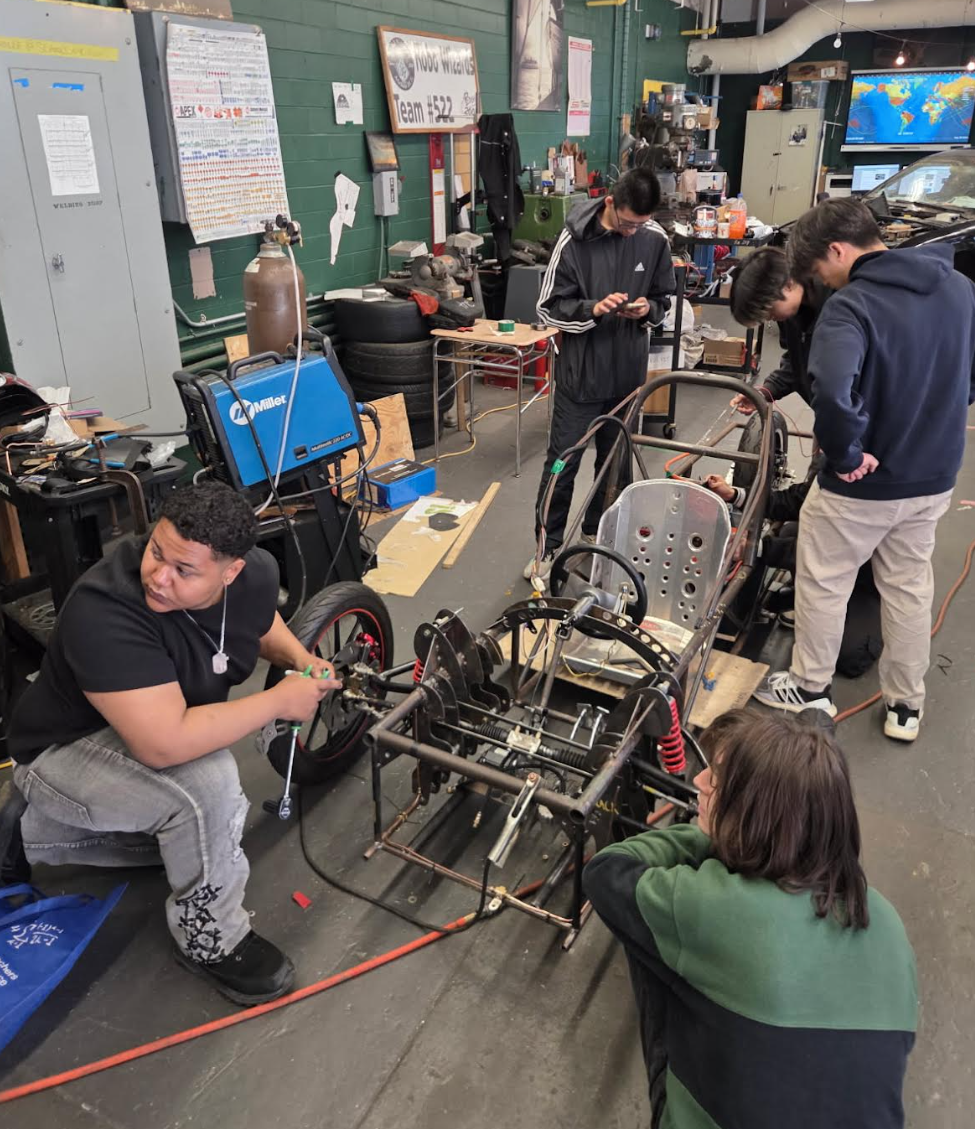

Today was one of those sessions where every corner of the shop had something happening at once.
Rhiley did the bulk of the brake line work, routing lines throughout the car and finishing the fittings, with Charles assisting. Ryan mounted the brake calipers and worked on connecting the plumbing. On the electronics side, work began on a CAN bus-based Arduino body control module — a big step toward getting our subsystems talking to each other properly.
We spent a good chunk of time chasing down a contactor issue. After a long diagnostic session it turned out the unit itself was functioning fine — but we ordered two spares anyway. That’s the kind of problem you don’t want to rediscover at the track in Texas.
Rhiley, Crouton, Alex, and Charles also tackled steering geometry, finalizing the layout and getting it tacked in. The new rack position has meaningfully improved the Ackermann angle and the difference is immediately noticeable — the car tracks much more predictably. It still needs a full weld-up, but the geometry is locked.
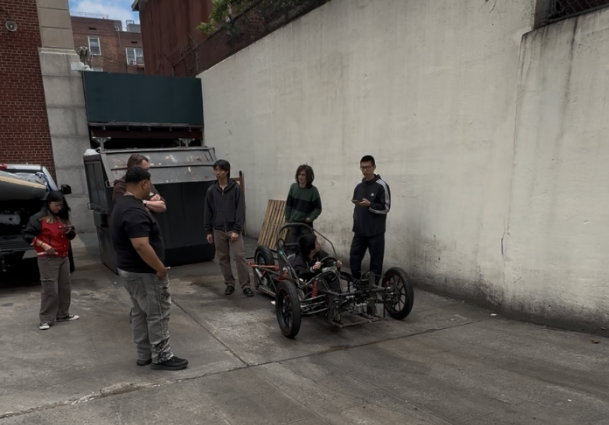
Then we actually drove the thing. Low-speed flagging practice went well, and the car climbed uphill aggressively on barely 50A. The flat acceleration run was faster than expected. Best of all, regenerative braking is working exceptionally well — the car stops with almost no input from the hydraulic system. That’s exactly where we want to be before Dallas.
Nathuli worked through safety officer training and administrative operational procedures. We also evaluated polycarbonate options for the aeroshell body panels.
We’ve had some slower days lately — sessions with mistakes, setbacks, and the kind of frustration that comes with building something this complex on a deadline. Today was the antidote. The conversation was sharp, the shop was calm, everybody had their hands on something, and the work showed it. Days like this remind you why the hard ones are worth pushing through.
Henriques brought pulled chicken and homemade sausage. A fitting end to a good day.
More soon.


Project Manager:
Thomas Smolka
Email:
seagullsolarsi@gmail.com
Telephone:
718-614-4835
Address:
101 Belmont Pl, Staten Island, NY 10301